Joining The Bandwagon

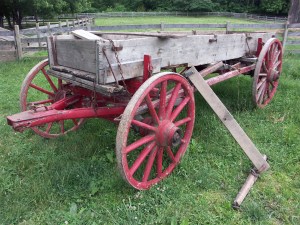
Old Wagon in Pasture

Like this, but with instruments

It may not be news, but two facts are colliding – rural communities lack lawyers and the placement rate for newly graduated law students is abysmal thanks in part to a nationwide glut of attorneys – in the ivory towers of academia and the in paneled halls of Bar Associations (please allow the literary license – I know that very few law schools actually have ivory towers, most simply make do with concrete and cinderblock, and most Bar Associations’ hallways are paint & drywall). But there are efforts afoot to try to rectify the situation by, in one form or another, inserting tab A (new graduates) into slot B (rural communities).

Recently, the Wall Street Journal and Eastern Iowa News Now reported on efforts by the Iowa State Bar, the University of Iowa, Drake University in Iowa, and Creighton University in Nebraska to place law school students in to summer internships and young lawyers in to permanent jobs in small towns and rural communities.

Today, the Kansas City Star and the ABA Journal report on a collaboration between the University of Kansas Law School, Washburn Law School, and the Kansas Bar Association aimed at enticing young lawyers and law students into rural practice. Currently, the collaboration offers two programs, one to help students master the business management skills needed to thrive in a solo/small practice and the other arranges for unpaid internships with rural lawyers and judges.

Flora, Fauna and Balance

BalanceThere is one thing I have to say about moving a law office – don’t pack your checklist with all the rest of your papers. Took me 3 days to find it again and trying to tie up all the sundry loose ends from memory is a harrowing endeavor. You are constantly plagued with the nagging doubt that you’ve forgotten something. The only positive thing about this whole exercise (outside of the lower rent) was having scheduled some vacation time at the end of May (the great thing about being solo is that my boss is pretty easy-going when it comes to providing a little down time when needed).

For those not familiar with the idiosyncrasies of a rural solo practice, you have to realize that, unless you actually leave the vicinity of your practice (generally 500 miles is the minimum safe distance) vacation does not translate into time away from the office – rather, it translates into less time in the office (or dealing with client matters) and a more relaxed dress code. How much less time is highly variable and is highly dependent on the number of fires that crop up – rural clients understand that about the need to grab a little time away from the office from time to time (especially when the days are sunny, the fish are biting, or there’s hay to put up) and know that if you are on vacation, phone calls and e-mails may not always be returned the same day, but closings have to be done, bills have to be paid, invoices have to be sent, and court dates have to be made even if they do encroach on your time off. My latest vacation was about par for the course  – 4 half days in the office and 2 half days working from home out of 10 working days away.

The upshot was that I had plenty of time to clear various assorted bits flotsam and jetsam out of the barn, garage, house, and my mind with time left over to put up first crop hay. Nothing like physical labor and the relative quiet of the rural country side to clear out the noise of the e-mail, cell phone, social media connected world. By the end, I was ready to head back to the practice ready to dive into this summer’s version of adventures in solo practice – that is until my 5:00 AM greeting by a highly affectionate and horrendously odoriferous dog snapped my synapses out of my vacation induced bonhomie. There is nothing quite like a freshly skunked dog to focus one’s attention – no slow immersion into the work-a-day world, this is the jump-in-the-deep-end-oh-man-that-water’s-cold introduction to reality. This morning’s activities became focused on the single task of reducing the pungent cloud currently enveloping the dog without transferring it to those of us who would shortly be interacting with other people. There is little that can actually remove skunk smell from dog hair (only time can do that), the best one can hope for is to get to it while it is still fresh and remove enough of it so that the dog’s mere presence no longer brings tears to one’s eyes. It’s a battle best fought with degreaser, baking soda, and elbow grease – the folk remedies of tomato juice and peppermint mouthwash simply leave the dog smelling like a bowl of Tabbouleh that’s gone off.

Balance 0, skunk 1

Paranoia and Security

I’ve always found paranoia to be a perfectly defensible positionPat Conroy

Let me make something clear right from the outset, when it comes to the security of the technology that supports my business, I am not a raving, paranoid lunatic; I am completely capable of carrying on calm, quiet, rational conversations.

Back in the day, when hard drives were the size of washing machines, tape drives consumed half-inch tape on 12 inch reels, computers were huge blue boxes serviced by a cadre of adoring acolytes, and networks were comprised of tin cans, bits of string, and acoustic couplers security was simple – those without the blessing of the high priest (the systems administrator – a god-like being capable of patching a OS binary on the fly). The concept of an external attack was practically inconceivable simply because (a) it was the rare computer that supported even dial-up access, (b) dumb terminals and acoustic couplers were not your typical household appliance, and (c) an attack coming in at 300 baud (about 30 characters per second) is something you would notice. It was a halcyon time, carefree and innocent. A time where security was a backup tape and a warm blanket. A time doomed by its own success and the crushing inevitability of Moore’s Law.

Today, if your tech is connected to the outside world though anything other than a electrical power cord (and I have my suspicions about those), it is vulnerable to attack; it is not a matter of if, it is a matter of when. Therein lies the faustian bargain we make with the Internet – access to untold amounts of knowledge, pleasure, and power in exchange for our tech’s soul. But fear not, for tech also offers some hope of salvation if not complete redemption. Continue reading

Dear Joseph

Dear Joseph,

I hope you don’t mind the informality, Mr. Flanders seems a bit stiff for this blog (it’s more Carharts & Red Wings than Brook’s Brothers & Edmund Allens around here). First, thanks for the comment to Beyond Our Field of View; I am always flattered to know that someone other than spammers peruse my miscellaneous ramblings on rural law and rural lawyering. Now, to address some of your questions.

I don’t have a good definition of what or, more precisely, who a rural lawyer is. The prototypical rural lawyer lives and practices in a small town, yet some live in small towns but have offices in larger cities, and some live in larger cities and practice in small towns. By the way, “large” and “small” are relative terms depending on the area of the country you live in (what’s “large” out here on the prairie would look pretty “small” were it plopped down by Los Angeles – my guess is that there are more people in one block of downtown LA than there are in the small town I live in). If you are serving small town clients, you are a rural lawyer in my book.

There is nothing wrong with having both city clients and country clients. Donald Landon in Law Careers and Community Context: A Comparison of Rural and Urban Experience noted that to meet the entrepreneurial imperative of building a practice while still making a living, it was not unusual for rural lawyers to arrange their practice so that they drew clients from small towns as well as metropolitan areas – this is what practicing at suburbia’s edge is all about. No matter what, if you are starting a law practice, you are starting a business and you have to think first in terms of being an entrepreneur – unless you are blessed with a remarkably large personal fortune and practicing law just happens to be your way to do that “charity thing”, the point of this exercise is to make money, so take on city clients, country clients, or clients from other worlds (just be sure to get that retainer up front). Continue reading

WWCD

The holiday lull and the unseasonable winter weather can to a rather abrupt, simultaneous halt this week – seems that it takes real winter weather (snow, high temps eking their way into the teens, a northerly breezes) to make folks start to make good on those new year’s resolutions that this will be the year “I’ll see a lawyer about…” – putting an end to my brief sabbatical.

As a solo, any downtime is a mixed blessing. It’s great to have some time to catch up on all those little inconsequential chores that get put aside (things like dusting the office, rediscovering the top of your desk, or getting a jump-start on your tax returns), but the downside is that unscheduled downtime means that the ol’ marketing machinery ain’t working at capacity. So, I spent my brief break asking myself “WWCD?” (what would Carolyn do), re-reading my brand spanking new copy of Solo by Choice (my first version was reduced to a somewhat collated stack of highlighted, ink-smeared and tea-stained pages during the start-up phase of my practice – the inevitable death of all really useful books), and re-evaluating/revising my marketing plan.

So, I come back from my sabbatical with my “quiet mentor” a little chided (it is humbling to see yourself when the text describes common mistakes) and greatly invigorated – sometimes a little affirmation that, at its core, marketing is not all that difficult and that anyone can be a better marketer goes a long way. Thanks Carolyn.