A Letter to a 1L

Dear Chris,

Thank you for your e-mail. It is quite heartening to know that there are other souls out there with an interest in practicing in rural communities. There is no one way or single resource that will best prepare you for a career as a rural lawyer – based on my conversations with rural lawyers from across the country, I am coming to the conclusion that each rural lawyer’s career is unique to that lawyer and to the community they serve. What I can offer are some general observations intertwined with a smattering of  “were I to do it over agains” .

Since you had a few questions about business management, I assume that you are considering embarking on a career as a rural solo (though don’t discount the value being well versed in business management will have to a existing small rural practice). There are a number of fine books out there that cover going solo from the lawyer’s perspective (Jay Foonberg’s How to Start and Build a Law Practice and Carolyn Elefant’s Solo by Choice spring to mind) but if you want to learn about the ins and outs of running a business get in touch with SCORE – they offer mentoring, webinars, newletters, guides and live classes all designed to help you start and grow a business; all provided at little to no cost by SCORE volunteers (working or retired business owners, executives and corporate leaders). I wish I had connected with SCORE about 12 months before I opened my practice rather than 12 months after. Continue reading
Haircuts And Practice

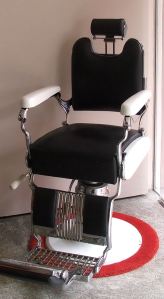
I had, the other day, the need for a haircut – an event that is becoming less and less an occasion with each passing year – an stopped by the local barbershop for a trim. Now, for the male population of a small town, the local barbershop is, for all intents and purposes, the equivalent of a day spa; a place to be pampered (or at least the grizzled male version of pampering) and to discuss the important issues of the day – the fate and future of the local sports team, the weather, crops, the market (farm, not stock), and the general competence (or lack there of) of various and sundry notables.

Now, while waiting for the number 2 chair – general barbershop etiquette, one would never presume to occupy the number 1 chair for just a “sides & back” trim – I had the chance to observe that solemn male ritual of the barbershop shave. Now this is no scrape the foam off with a multi-bladed techno-marvel kind of shave, this is soap and lather, hot towels, cold steel and steady ands kind of shave; there is the scent of danger here, an element of suspense when, at that first critical moment when 4 inches of keen edged surgical steel starts its initial glide down the cheek, conversation quiets in tribute to and recognition of that briefest moment of panic that lights the customer’s eye before fading into contentment as the steel safely starts its downward journey.

That moment of panic, however fleeting, found a echo in my memories – there reflected in those few milliseconds, was the essence of my state of mind during the initial days of my practice. From what had seemed like a good idea moments before the key was put into the lock and the rubicon was crossed now had morphed into  doubt cascading over dread, roiling over uncertainty – exhilaration, calamity, wonderment and elation all warring for recognition, for resolution – leaving an intense rawness behind that has faded into the contentment of a journey safe begun.

To Know What One Ought To Do

Three things are necessary for the salvation of man: to know what he ought to believe; to know what he ought to desire; and to know what he ought to do. Saint Thomas Aquinas Two Precepts of Charity

It is National Pro Bono Week and if you are here for that up-beat, positive, celebratory post you’ve come to the wrong place – there is a crying need for pro bono services in rural areas which, for the most part, is going largely unanswered and that is just plain depressing.

The need is very real – based on 2000 Census data, 459 of the 500 poorest counties in the nation are rural, 481 of the 500 counties with the lowest per-capita income are rural, and rural counties with poverty rates above the national average outnumber urban counties by 5 to 1. The rural poor are more likely to be married and more likely to be working than their urban counterparts, but they are also more likely to be generationally poor and chronically under-employed as well.

The problem is very real – an ABA survey shows that only 20 percent of lawyers live in towns/areas with populations of less 50,000 or less, and that distance and travel demands, lack of technology and associated infrastructure, and lack of supporting resources constrain the availability of pro bono services. The prevailing perception seems to be that because no one lives in rural counties and even if they did their legal problems are so trivial that it is not worth expending resources in these areas. It is a case of too few, too small, too hard, why bother. Continue reading

Small Town Courting

A fundamental difference between a small town and a small city is that small towns, regardless of their population, still have courthouses whereas small cities, in their hurry to morph into bedroom communities for some urbane metropolis, have justice centers.

Justice centers are grand buildings, integrating glass, steel and stone into a monument  to bureaucratic judicial efficiency providing one stop shopping for all things legal from the sheriff to the recorder and from the courtroom to the jail cell. These are places designed  for those who assume that the efficiencies of consolidation & modernization make up for chronic underfunding. Here there is a cold sterility to the environment that seems to make courtesy appear artificial and channels the mass of humanity that enters its walls into tired, well-worn roles.

Courthouses, on the other hand, are quiet buildings sitting in silent dignity on the edge of the town square; more cathedral than monument. Newer buildings housing the sheriff, the recorder and the jail sit, like handmaidens, behind and to the side. Courthouses were built out of pride and are maintained out of tradition. There is a warmth within those weathered walls and worn and paneled walls that encourages courtesy – more as an act of devotion than a gentile gesture – and welcomes those who enter.

Recently I’ve had similar matters in both a small city justice center and a small town courthouse. In the former, the matter was concluded in a matter 10 tense minutes – a business transaction handled in the crisp efficiency only a streamlined & work-flowed process can provide. In the later, the matter took about twice as long, but along the way, I got caught up on what’s new in town, the weather, and the health of a friend’s dog. Both matters were billed as fixed fees, only one made me glad to have put on my lawyer suit that day.

A Well-Informed Mind

A well-informed mind is the best security against the contagion of folly and of vice. The vacant mind is ever on the watch for relief, and ready to plunge into error, to escape from the languor of idleness. – Ann Radcliffe

At a recent “new lawyer” seminar the speaker, in response to a question from the audience, spent quite some time dispensing tips and procedures for avoiding “bad” clients and provided a cautionary tales about how they handled their “worst” clients. While the tips were the usual dull platitudes,  I was struck by the automatic assumption that there are “good” and “bad” clients – seems a fairly silly base level assumption to make if one is in what is essentially a customer service business.

As I see it, clients come to a lawyer during times of stress. They come to us in a frame of mind that prevents them from operating as their highest, most rational self, and they come to us more through the actions of the imp of the perverse than through their own volition. So, is it any wonder that, at these times, they may require some hand-holding as they venture onto this new and unknown path. Or that, to a stranger, they may appear to be difficult or unpleasant. There is no good or bad here, there are just people who are reacting rather than consciously acting.

Implicit in our role as advocate, is the assumption that our clients lack the standing, skill, knowledge, ability, and perhaps even the emotional capacity to speak for themselves. It follows then, that as an advocate, it is part of our function to inform our clients, to clarify expectations, to educate and inform, to stave off that “plunge into error”. When we take on the mantle of advocate, the base level assumption becomes one that allows clients to be somewhat less than themselves; allows for less than stellar behavior.

There are no good or bad clients, there are client’s whose “shadow-self” (to borrow a phrase from Pauline Tesler) is one I am not prepared for, but that is my failing, not the client’s. My job is to learn and do better the next time. Hey, perhaps I did take something away from that CLE after all.